How to Check Engine Oil Without Overfilling
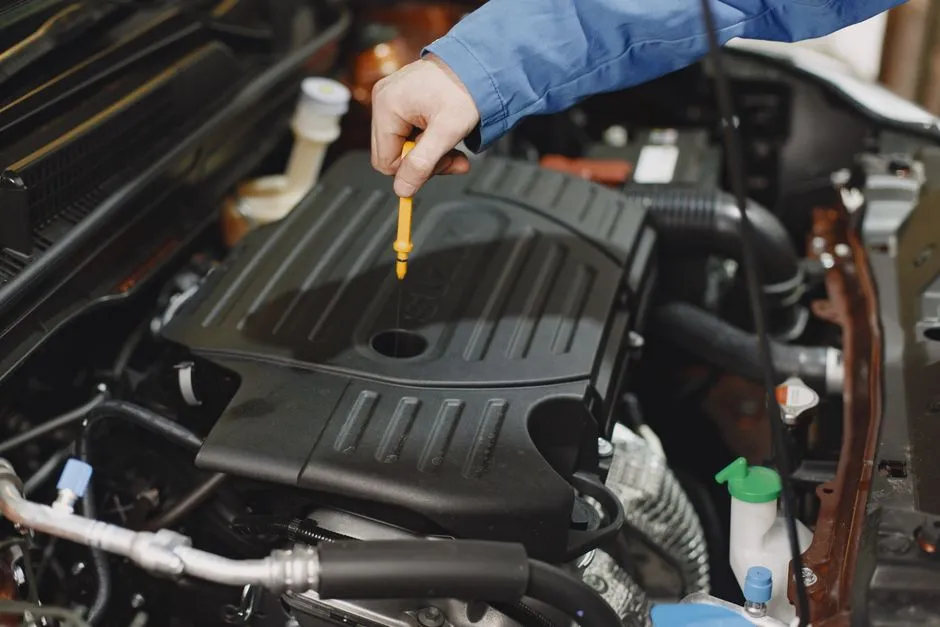
Follow the engine's specified checking condition
To check engine oil without overfilling, park on level ground, secure the vehicle, and follow the owner manual for engine temperature and wait time. With the engine off, remove the dipstick if fitted, wipe it, reinsert it fully, remove it again, and read the oil against the marked acceptable range. Add only the specified oil in small amounts, wait as directed, and recheck.
The fluids-and-checks section uses the manual's procedure because “warm-ish, probably” is not a transferable engine specification.
Know whether the vehicle has a dipstick
Some vehicles use a traditional dipstick, some provide an electronic oil-level measurement, and some use both. Do not confuse an oil-life display with oil level: remaining service-life estimates do not prove the engine contains the correct quantity.
Consult the current owner's manual for the control sequence, required temperature, parking condition, wait time, and acceptable display range. If the electronic check reports that conditions are not met, correct those conditions rather than repeatedly cycling menus and hoping the sensor becomes more agreeable.
Make the area safe before opening the hood
Park away from traffic on firm, level ground. Select Park or the appropriate gear, apply the parking brake, switch the engine off, and keep the key or start control secure. Keep loose clothing, hair, jewelry, hands, and tools away from belts, fans, and hot parts. Electric fans can start unexpectedly on some vehicles even when the engine is off.
Do not open the cooling system as part of an oil check. A hot pressurized cooling system can release scalding fluid. If there is smoke, a strong fuel odor, active leaking, overheating, or another immediate hazard, move away as appropriate and obtain qualified help.
Read a dipstick twice
Locate the correct dipstick and oil filler using the manual; nearby transmission or other fluid points can be mistaken for them. Pull the dipstick, wipe it with a clean lint-resistant material, insert it fully, pause, then remove it without turning it upside down.
Read both sides. The level should fall within the marked range specified by the manufacturer. Smearing can occur when the stick passes through its tube, so repeat the wipe-and-read sequence if the boundary is unclear. Use the same orientation and good lighting.
Oil color alone does not determine remaining service life. Darkening can be normal, while glitter-like metal, foam, a milky appearance, strong fuel odor, or an unexplained level change deserves qualified assessment rather than an internet diagnosis.
Add the exact specification, a little at a time
If the reading is below the acceptable range, verify the required viscosity grade, performance specification, and product type in the manual and on the oil container. Brand names do not replace specifications. Do not assume that the oil used in another vehicle is suitable.
Open the correct filler cap only after cleaning loose dirt from around it. Use a clean funnel and add a small measured amount well below the estimated total needed. Replace the cap, allow time for oil to drain to the sump as directed, then repeat the full reading procedure. Stop within the marked range.
Overfilling can cause engine problems; do not fill above the indicated maximum. If too much was added, do not improvise suction tubing or drain-plug work without the correct procedure, equipment, and skill. Obtain qualified service.
Treat warnings and repeated loss seriously
An oil-pressure warning is not merely a request to check the level at the next convenient weekend. Safely stop and switch off the engine as the owner manual directs; low pressure can have causes that adding oil does not fix. Arrange assistance rather than continuing to drive for diagnosis by noise.
If the level repeatedly falls, inspect the parking area for leaks without crawling beneath the vehicle, record mileage and additions, and seek diagnosis. Used oil and contaminated materials require lawful disposal; never pour them onto land, into drains, or into household containers meant for reuse.
Use the tire-pressure guide for another label-led check. Routine maintenance works best when readings, units, dates, and additions are recorded. The notebook does not need chrome trim. It only needs to remember what the dashboard cannot explain.