How to Check Car Fluids: Owner Checks and Service Limits
- How do you check car fluids safely?
- What should you identify before opening the hood?
- Which conditions have to be right first?
- What does the fluid inventory contain?
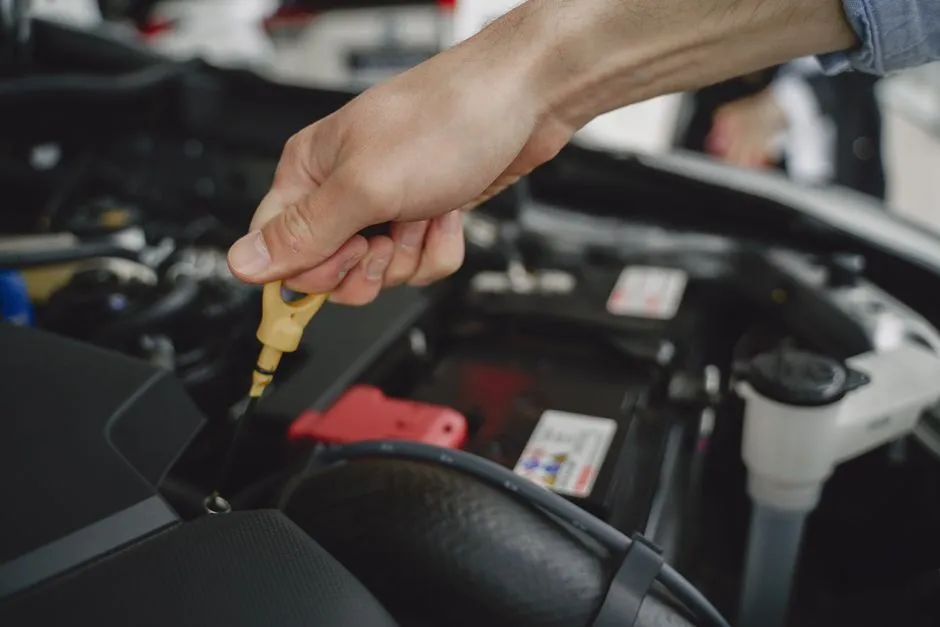
- How is the engine-oil check performed?
- How do you check coolant without opening a hot system?
- What does a brake-fluid reading tell you?
- Why might transmission fluid be a service-only check?
- What should you check about washer fluid?
- What about power steering and other systems?
- How often should checks and replacements happen?
- What should an observation record look like?
- When should you stop the checklist?
- Sources
How do you check car fluids safely?
Check car fluids using the owner's manual for the exact model, engine, transmission and market. Identify each reservoir or dipstick, follow its parking, engine-state and waiting conditions, and compare the reading with its specified marks. Keep hot cooling systems closed and leave brake-fluid intervention and non-owner transmission checks to qualified service. Stop for warnings, leaks or uncertainty; an oil-pressure warning requires the manual's immediate stop-and-shut-down response. A level check does not certify a vehicle safe to drive.
What should you identify before opening the hood?
Make a fluid inventory from the manual, not from cap color or an online photograph of a similar engine. Record the vehicle's model year and powertrain beside the manual edition. Then find the under-hood diagram, each fluid-check section, the maintenance schedule and the warning-message instructions.
This is a desk-researched guide, not a report of checks performed on a vehicle. Its worked manual example is the American Honda 2025 Civic Hatchback, continuously variable transmission (CVT) branch, not the separately documented hybrid or manual-transmission branch. The linked sections were read on September 8, 2026. They demonstrate why a generic “check everything cold” or “check everything running” procedure is inadequate.
Set up three columns:
- Owner observation: the manual gives an accessible level-reading procedure.
- Qualified-service task: the manual directs a dealer or technician to check it.
- Applicability unresolved: the equipment or correct procedure has not been identified.
An unresolved row is not permission to find a cap by trial and error. Ask the manufacturer or qualified service provider to identify the system. Do not remove covers, loosen plugs or go beneath the vehicle to complete this inventory.
Which conditions have to be right first?
Honda's maintenance safety section requires a stationary vehicle on level ground, parking brake applied and engine off. It warns that the radiator fan can operate even with vehicle power off. Keep clear of the fan and other moving components, and allow hot engine and exhaust parts to cool before touching them.
Do not confuse automatic idle stop with a maintenance shutdown. The same manual prohibits opening the hood while Auto Idle Stop is active. Follow the actual hood-opening and support instructions; if secure access cannot be established, stop and obtain assistance. This guide contains no engine-running inspection.
Keep vehicle-fluid handling within the manufacturer's procedure and product safety instructions. Do not taste a fluid or deliberately inhale it to identify it. A stain or unusual smell is information for a technician, not a reason to handle an unknown substance.
What does the fluid inventory contain?
This table summarizes the Civic CVT example. It is an index to the linked procedures below, not a transferable specification for another car.
| Fluid | Owner's reading or record | Boundary |
|---|---|---|
| Engine oil | Dipstick reading between its marks under the specified conditions | No invented quantity between marks; no pressure diagnosis |
| Engine coolant | Cold reserve-tank level | No radiator-cap opening in this guide |
| Brake fluid | Level against reservoir MIN and MAX | Low level requires inspection, not an assumed top-up cure |
| CVT fluid | Dealer check recorded in service history | No owner check or change |
| Washer fluid | Reservoir level or fitted level-sensor message | Correct washer product, not engine coolant |
Do not add a separate clutch reservoir to a CVT checklist just because another page in the same manual covers clutch fluid. Likewise, a system found on another trim does not establish what is fitted to your vehicle.
How is the engine-oil check performed?
The Civic's Oil Check page recommends checking at refueling. With the vehicle level and engine switched off, it specifies waiting approximately three minutes. Keeping the maintenance precautions above in force, remove the dipstick, wipe it with a clean cloth or paper towel, fully reinsert it, then remove it again to read between the lower and upper marks. Refit it afterward.
That waiting period belongs to this manual. It is not a universal cooldown time, a reason to touch hot parts, or a substitute for another vehicle's instructions. Honda also notes that certain driving conditions can raise the level above the upper mark and directs concerns to a dealer. Do not diagnose an overfill or remove oil from that observation alone.
Record the actual position, not merely “oil checked.” If addition is needed, use the exact engine's oil specification and full adding procedure; this guide supplies no pour amount. The engine-oil temperature guide addresses operating readings, a different question from the quantity on a dipstick.
How do you check coolant without opening a hot system?
Read the level only under the manual's prescribed cold conditions. For this Civic CVT branch, the coolant page requires the engine and radiator to be cool for the reserve-tank check. Identify that tank from the correct diagram and observe its marked level externally.
Never open a hot radiator or pressurized cooling-system cap: escaping coolant can cause serious scalds. This introductory guide does not instruct cap removal, pressure release or coolant addition. An empty tank, low reading, warning or suspected leak goes to qualified service rather than an improvised refill.
The source specifies Honda Long Life Antifreeze/Coolant Type 2, supplied premixed with 50% antifreeze and 50% water. It says not to add straight antifreeze or water. That is a product-specific instruction, not a recipe for mixing coolant yourself.
Put the exact coolant identity in the record. “Same color as the tank” is not a specification. If the existing fluid's identity is unknown, ask the service provider to resolve it before buying or adding anything.
What does a brake-fluid reading tell you?
Honda's Brake/Clutch Fluid section places the level between MIN and MAX on the reservoir. Observe those marks without opening the reservoir. If the level cannot be read clearly, mark it unreadable and arrange inspection.
At or below MIN, Honda calls for dealer inspection for leaks or worn brake pads as soon as possible. This guide does not distinguish those causes from appearance or instruct topping up, bleeding or replacing brake fluid. If braking is abnormal or a brake warning is present, stop safely and obtain qualified assistance; a visually acceptable level does not override it.
The specified fluid on this page is Honda Heavy Duty Brake Fluid DOT 3. Its warning explicitly excludes DOT 5 as incompatible with this braking system. Numbers on fluid labels are not an invitation to choose a supposedly upgraded product.
A photograph of apparently clear fluid also does not establish the brake system's condition. Record what is visible and the warning status; leave diagnosis and intervention to qualified service.
Why might transmission fluid be a service-only check?
An inaccessible dipstick is not a missing step in the owner's routine. In this Civic CVT example, Honda's Transmission Fluid section specifies HCF-2 and explicitly directs a dealer to check the level and replace fluid when necessary. It tells owners not to check or change it themselves.
Record “dealer check required,” the last documented service and any unresolved service-schedule question. Do not record “level normal” when no level was measured. Do not infer that a service-only system never requires maintenance.
For another vehicle, first establish whether its owner's manual actually provides a check. Do not borrow an engine-running, selector-cycling or warm-dipstick sequence from another transmission. A procedure involving a level plug, vehicle lifting or service equipment belongs with a qualified technician, not this driveway checklist.
What should you check about washer fluid?
Identify the washer reservoir separately from cooling-system tanks. Honda's washer-fluid instructions distinguish vehicles with a level sensor from those without: the former display a low-fluid message; the latter require checking the amount.
The page permits commercially available windshield-washer fluid and prohibits engine antifreeze and vinegar/water mixtures. It also says to pour carefully and avoid overflowing. Follow the vehicle and product instructions, including any climate suitability and handling precautions; this guide offers no homemade fluid formula.
If the reservoir cannot be confidently identified, stop before pouring. If fluid was put into the wrong opening, seek qualified guidance rather than trying to flush it out. Record the full product name when replenishment is performed under the correct instructions.
What about power steering and other systems?
A useful checklist must allow “not fitted” as well as “not owner-serviceable.” Ford's EPAS-specific maintenance section, for example, states that its electric power steering system has no fluid reservoir to inspect or fill. That source is a separate system example, not a statement that every Ford or every Civic has identical equipment.
For a vehicle with hydraulic steering, obtain its exact fluid and checking instructions. Do not assign the coolant or brake procedure to it. Differential, transfer-case, high-voltage cooling and other equipment-specific systems should appear in your inventory only when the correct vehicle documentation identifies them. Ask a qualified service provider about any required checks outside the owner's instructions. No under-car, battery or high-voltage work is included here.
How often should checks and replacements happen?
Copy the inspection frequency separately from replacement service. Honda's Inspection and Maintenance page specifies a monthly brake/clutch-fluid level check for this manual and routine inspections before long trips, at washing or refueling. Its oil and coolant pages recommend those level checks at refueling.
Those are opportunities for checks under the proper conditions, not permission to inspect hot components at a fuel stop. A reminder does not override the cold-coolant requirement.
Do not convert a monthly level check into a monthly fluid change. Enter the actual maintenance schedule or service-indicator requirement separately, including the manual section and relevant operating-condition qualifications. If records are missing, write “history unknown” and ask the service provider what is required.
What should an observation record look like?
The following is an original fictional recording example, not a completed vehicle inspection:
| Item | Observation or evidence | Follow-up record |
|---|---|---|
| Engine oil | Reading between marks; manual conditions recorded | Retain date and odometer reading |
| Coolant | Reserve-tank marks not readable | Inspection requested; no cap opened |
| Brake fluid | Level not checked | Do not mark complete |
| Transmission | No owner reading attempted | Request service-history confirmation |
| Washer fluid | Correct reservoir identified; product not yet selected | Verify vehicle/product instructions before replenishment |
Use precise states: observed, not checked, unreadable, not fitted, or service required. Leave numerical measurements blank when none were taken. These categories prevent a broad “all fluids okay” note from concealing an unfinished task.
Attach the relevant manual section to each row. Record a warning's exact wording separately from a fluid level. The cold-oil documentation guide similarly separates a published material property from permission to operate an engine; neither a data sheet nor a filled-in worksheet provides that permission.
When should you stop the checklist?
Stop for an active warning, suspected leak, abnormal braking, steam, smoke or uncertainty about safe access. Follow the dashboard and exact manual; obtain qualified assistance rather than continuing a routine check to explain the warning yourself.
For a source-specific example, the 2022 Ram 2500/3500 oil-pressure warning instructions require stopping, shutting down and contacting a dealer, with no operation until the cause is corrected. They distinguish pressure from oil quantity.
A completed inventory is useful maintenance documentation. It is not a roadworthiness inspection, a diagnosis or clearance to drive. Use the engine-oil collection for related explanations, while leaving vehicle-specific limits and service decisions with the manual and qualified professionals.