Engine Oil Temperature: Normal and Too Hot
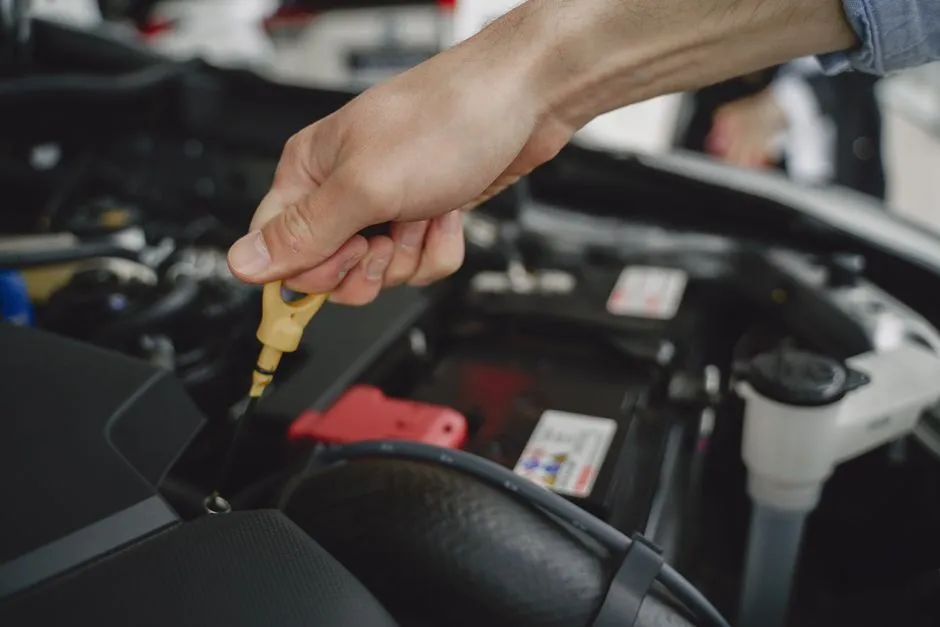
- What is a normal engine oil temperature?
- Why is there no single ideal oil temperature?
- Is 93C or 199F a universal target?
- How does oil temperature change during warm-up?
- Why can oil temperature be higher than coolant temperature?
- What happens on the highway or while towing?
- Which readings mean stop driving?
- What can cause an oil-temperature reading to change?
- Should you fit an aftermarket oil-temperature gauge?
- How do you establish a useful baseline?
What is a normal engine oil temperature?
A normal engine oil temperature is the warmed, stable reading that remains inside the vehicle manufacturer's normal gauge band under the current load. There is no safe universal range for every engine. Sensor location, oil system, cooling design, specified lubricant, ambient temperature and vehicle use all change the reading. Treat the owner's manual, marked gauge zones and dashboard warnings as the limits. A red zone or oil-temperature warning requires the manual's immediate response, not an internet average.
That definition is less convenient than one number, but more useful. Some manuals state a temperature; others show only a normal band. Some vehicles display an oil-temperature value, some provide a segmented gauge, and many provide no driver-facing oil-temperature readout at all.
Why is there no single ideal oil temperature?
Engine oil has several jobs at once. It forms a film between loaded surfaces, carries heat away from components, suspends contaminants, supports hydraulic systems and protects against corrosion. Temperature affects how it performs all of them.
Oil becomes less viscous, or easier to flow, as it heats. When cold, it is more resistant to flow. ExxonMobil's motor-oil technical FAQ explains the design problem directly: oil must flow at low temperature without becoming too thin to maintain separation between surfaces at high temperature. Multigrade oils are formulated for that span.
The engine manufacturer selects an oil viscosity grade and performance specification for a particular engine design and operating envelope. Changing to a thicker grade because a dashboard number appears high is not a diagnosis. A higher viscosity can alter flow, efficiency and hydraulic operation. Use only a grade and specification permitted by the manual.
The temperature shown is also system-specific. A reading taken in the sump does not have to match a reading near a gallery or another calculated or measured value. The displayed value may be filtered by the vehicle electronics. Compare a reading only with documentation for the same vehicle and display.
Is 93C or 199F a universal target?
No. It is a useful example of why the model-specific manual matters, not a network-wide threshold.
Ford's current 2025 Mustang GTD oil-level procedure requires engine oil at 93C (199F) or higher before that vehicle's oil-level check. That instruction applies to that procedure on that vehicle. It does not say that every engine is cold at 92C or safe at every temperature above 93C.
Other manufacturer pages use zones rather than numbers. A current Ford gauge description says simply that the gauge indicates engine oil temperature and may be configurable. The absence of a numeric limit is intentional: the driver follows the marked band, warnings and vehicle-specific instructions.
Use three references in this order:
- The current owner's manual for the exact model, engine and market.
- The gauge's marked normal, caution and red regions or the dashboard message.
- The established behavior of that vehicle under repeatable conditions.
The third reference never overrides the first two. A familiar high reading does not make a warning normal.
How does oil temperature change during warm-up?
Oil normally warms more slowly than coolant. Coolant circulates through hot engine passages and is regulated by a thermostat. Oil begins cold in the sump, circulates through bearings and other components, and accumulates heat as the engine operates. A coolant gauge reaching its usual position does not prove that the oil has reached its full operating temperature.
During a cold start:
- oil is more viscous than it will be when warm;
- the temperature display may show a low value, a cold zone or no value yet;
- pressure may be higher because the oil is more resistant to flow; and
- high engine speed and heavy load should wait until the vehicle's warm-up conditions are met.
Do not use long stationary idling as a generic oil-warm-up method. The US Department of Energy's consumer idling guide says modern vehicles generally warm faster when driven and notes that most manufacturers recommend driving gently after about 30 seconds, including on cold days. The vehicle manual still controls where weather, diesel operation, visibility or a specific procedure requires something different.
Drive gently during warm-up. Avoid wide throttle, high engine speed and towing load until the oil indication and manual say the engine is ready. Do not convert a fixed number of minutes into a rule: ambient temperature, route, engine load and oil-system capacity change the time substantially.
Why can oil temperature be higher than coolant temperature?
Oil and coolant do not measure the same thermal path. Coolant removes heat from the cylinder head and block and is actively regulated around its thermostat and cooling-system strategy. Oil contacts loaded bearings, piston-cooling jets where fitted, valvetrain parts and turbocharger bearings where fitted. It also receives heat from friction and from components near combustion.
Under light operation, oil may lag behind coolant. Under sustained speed or load, oil can continue rising after coolant has stabilized and may run hotter. An oil cooler, if fitted, moves heat between the oil and air or coolant depending on its design. The displayed relationship therefore changes among vehicles.
Do not diagnose a fault from the fact that two gauges disagree. Check instead:
- whether each reading is inside its own specified range;
- whether the difference is stable for that operating condition;
- whether either value continues rising after load falls; and
- whether a warning, leak, odor, smoke or performance change accompanies it.
A widening gap may justify inspection, but it does not identify the failed part. Sensor position, cooling control, oil level and vehicle load all need vehicle-specific diagnosis.
What happens on the highway or while towing?
Sustained highway speed can bring oil to a steady operating plateau because load and airflow are relatively stable. Stop-and-go traffic may reduce airflow while repeated acceleration adds heat. Long grades, towing, high ambient temperature, high engine speed and performance driving increase the heat the oil must carry.
A rise under added load is not automatically abnormal. The important pattern is whether it remains within the vehicle's allowed range and returns toward its prior level when the load is reduced. A continuing climb, a sudden step without a load change, entry into a caution or red zone, or a dashboard message needs action.
Before towing, confirm the manual's trailer limit, required oil specification, cooling-system requirements and any severe-service maintenance schedule. Do not infer tow capability from an oil-temperature gauge. Load limits depend on the complete vehicle configuration.
Use this pattern table as an observation guide, not as a substitute for the manual:
| Pattern | Interpretation | Response |
|---|---|---|
| Rising gradually after a cold start | Normal warm-up if no warning is present | Drive gently until the vehicle's warm condition is met |
| Stable within the marked normal band | Normal for that load and ambient condition | Continue monitoring |
| Higher during a long grade or towing, still in the allowed band | Added load is producing more heat | Reduce load if needed and follow towing guidance |
| Continues rising after speed or load falls | Heat is not recovering as expected | Stop stressing the engine and arrange assessment |
| Enters red area or displays high-temperature warning | Outside the permitted operating range | Follow the dashboard and manual immediately |
| Oil-pressure warning illuminates | Lubrication pressure may be inadequate | Stop safely and switch off as the manual directs |
Which readings mean stop driving?
The dashboard instruction is the first authority. If it directs you to stop, move out of traffic to a safe legal location, secure the vehicle and switch off as directed. Do not continue to reach a preferred destination.
Ford's current oil-temperature and pressure gauge instructions illustrate why the warning type matters. For an oil-temperature needle in the red section, the manual says to reduce engine speed safely to allow cooling. For an oil-pressure warning, it says to stop safely, switch the engine off and check the oil level. Other vehicles may issue different instructions; use yours.
Treat these conditions as stop signals:
- an oil-pressure warning while the engine is running;
- an oil-temperature red zone or stop-engine message;
- smoke, a burning-oil odor or visible active leakage;
- knocking, severe loss of power or a new mechanical noise; or
- oil and coolant temperatures both outside their normal ranges.
Once stopped, keep clear of moving and hot components. Do not open a pressurized cooling-system cap. Do not crawl beneath the vehicle at the roadside. If safe inspection cannot explain and correct a simple oil-level issue under the manual's procedure, arrange roadside assistance or qualified service.
Low oil level and low oil pressure are not interchangeable. Adding oil may correct a low level; it does not prove that pressure has returned or resolve another lubrication-system fault. Our guide to checking engine oil level shows the correct manual-led sequence without overfilling.
What can cause an oil-temperature reading to change?
Start with observable conditions before naming a component.
Normal operating inputs include cold start, ambient temperature, traffic, engine speed, grade, towing mass and sustained load. A change that tracks one of these inputs and recovers afterward may be expected if it remains inside the specified band.
Maintenance variables include oil level, the exact viscosity and performance specification, oil age, filter condition, airflow and the cooling system. Verify records and visible conditions. Do not replace parts from a temperature reading alone.
Fault possibilities include a sensor or display problem, restricted oil or coolant flow, oil-cooler trouble, abnormal combustion or excessive mechanical friction. This list is not a diagnostic decision tree. Testing pressure, sensor output, oil flow or cooling-system operation requires service information and appropriate tools.
Repeated excess heat matters even when the oil has not reached a flash or boiling point. High bulk-oil temperature lowers viscosity while the engine is running and accelerates oxidation over time. Shell's technical guide to oil temperature explains that the lubricant film must remain thick enough to separate surfaces and that higher temperature shortens oil life. Flash-point figures from a product data sheet do not define a safe dashboard limit.
Should you fit an aftermarket oil-temperature gauge?
Only if there is a defined need and a vehicle-specific installation plan. A sensor must measure at a meaningful location, use compatible materials and seals, avoid leaks, and be wired and fused correctly. A generic adapter can interfere with oil flow or create a leak path.
An OBD reader may show an oil-temperature parameter on some vehicles, but not every powertrain reports one and not every app label proves a direct sensor value. Compare the parameter identifier and units with manufacturer service information. Do not use a hidden diagnostic menu while driving.
Installation that opens the lubrication system or changes electrical wiring should follow the manufacturer procedure and be handled by a qualified technician when the correct port, sealing method, circuit protection or calibration is uncertain.
How do you establish a useful baseline?
After confirming that the vehicle is correctly maintained, record the displayed oil temperature under repeatable conditions:
- Use the same display and units.
- Note ambient temperature and whether the engine began fully cold.
- Record the reading after a gentle warm-up at a familiar steady route and speed.
- Note vehicle load, towing status and any long grade.
- Record coolant temperature and warnings separately.
- Repeat on several normal trips.
This baseline helps identify change. It does not create a new red line. If the manual supplies a normal band, caution band or maximum, those remain controlling.
The practical answer is therefore vehicle-specific. Normal oil temperature is a stable warmed reading inside the manufacturer's allowed range. A load-related rise can be expected; a persistent climb, warning or red-zone reading cannot be dismissed. Use the correct oil, warm the engine through gentle driving, reduce load when temperature rises, and stop when the vehicle tells you to stop.